






































































Cutting cladding Cedral® boards*
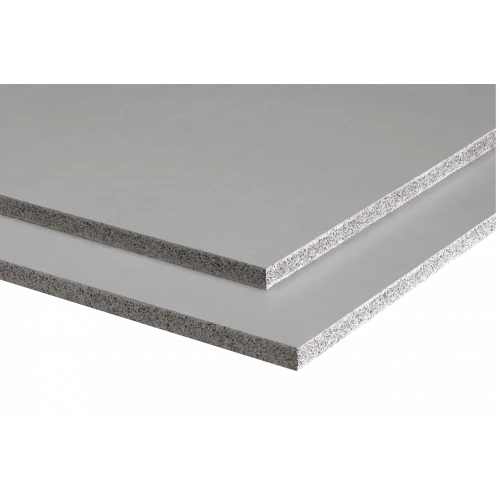
Cedral cladding materials have become popular with architects as they allow them to design buildings with highly weather resistant exteriors and robust interiors. As you would expect they are typically tough and resist scratches and water. They are also easy to keep clean. However, these materials are difficult to cut. It is also important to use the right method and tools for the application to ensure you have the finish needed when cutting very hard composite panels.
When you get your composite cladding, it is important to make sure each plank is the correct size for your project and to do this you need to cut down each plank using the correct methods. The method of cutting is dependent on the amount there is to be done.
The question is how to cut the boards in a way that ensures that the finished product looks like it was done by a professional, rather than by your children?
There are actually several different ways for cutting Cedral Weatherboard. In this article we cover 6 tools that you can use when cutting composite cladding boards.
1. Cedral board cut by Handsaw
First one on the list is the traditional Handsaw. It is a must have tool to any tradesman or DIY enthusiast. Handsaw is often used for either plastic or wood. They cut using both the push and pull stroke. Selecting the wrong blade for Cedral boards may result in a raw finish, while selecting the right blade will result in a finer finish.
Handsaws with fewer teeth are not recommended to cut Cedral boards as they are best for fast, coarse cuts only.
Also with this method, cutting from the back of the board is advisable as the saw guide leaves marks across the board surface.
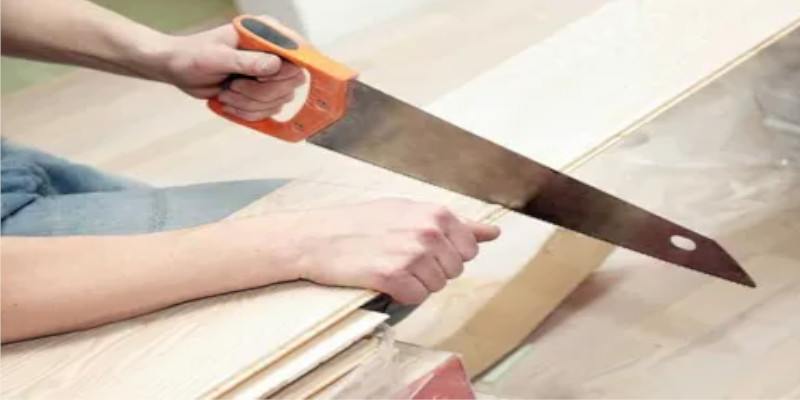
Board cut by handsaw
Advice
Never use masking tape on cuts when working with wood grained structure. Tape won't stick to the raw surface as well as to plain finish board. As earlier mentioned cutting from the back will stop your board of chipping on edges. Why? When the saw is pulled up it pushes and presses the fibre-cement plank, avoiding chipping and tearing at the same time. By doing other way round you will be pushing the material out and damaging board edges.
If you decided to use handsaw as a main tool to cut your Cedral boards you should fallow simple rules.
Rule 1. Don’t try to cut to fast!!
Remember! Boards are 3.6m long and 186mm wide. If you rush your cut through, you may end up splitting your board at the end. This is not something that you want to see, for sure.
Rule 2. Holding it down firmly.
Cedral board should resist on a firm surface. Any movement may cause the board to crack in an unwanted direction. You will find that the straight edge will tend to shift during your cut, especially on long cuts, if you don’t have a firm grip on it and a lot of weight pressing down on it. That tends to ruin the cut and send you back in search of more material.
Rule 3. Test cutting is recommended.
By doing so you will see possible results. It's very important in situations where you don't want to pay for extra boards. Not using test technique may led to more than one piece of paneling being discarded.
Rule 4. Measure twice, cut once.
The last thing that any of us need is to end up having to buy more material, because we found that we cut it off twice and it’s still too short.
It is good practice to cut board 20mm longer. Why? You will relieve the board of heavy off cut. By having only 20mm off cut you eliminate risk of damaging the board.
2. Guillotine
Second method to cut cladding boards is to use Guillotine. They’re designed to cut long pieces of Cedral boards into smaller, more manageable boards.
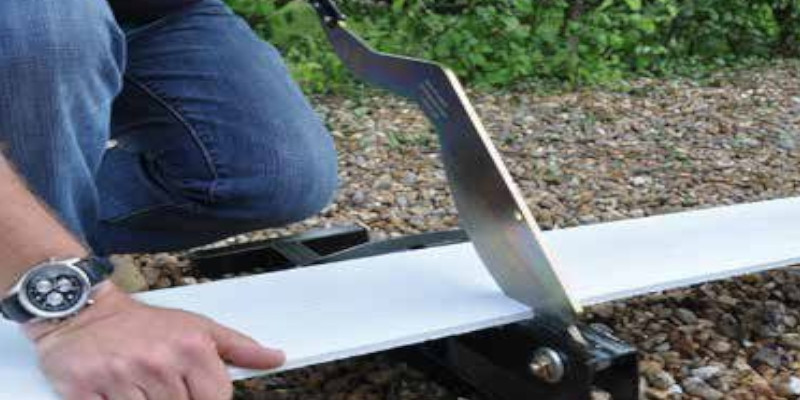
Cladding guillotine operates similary to the action of scissors. The blade shears the material, starting at one side of the sheet. Guillotines are operated and powered by a single person. The small force provided by the operator is increased to provide much larger force at the blade. By pushing straight down the blade, material shears in 2 separate pieces.
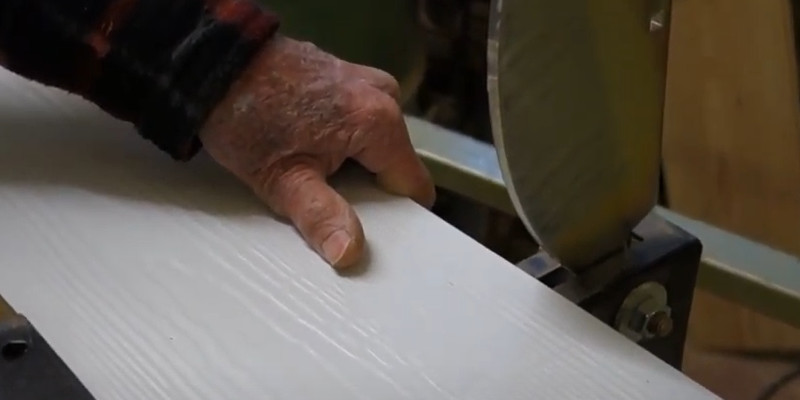
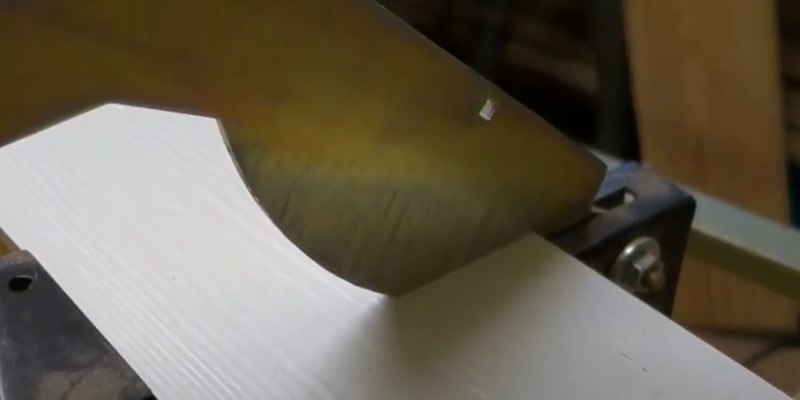
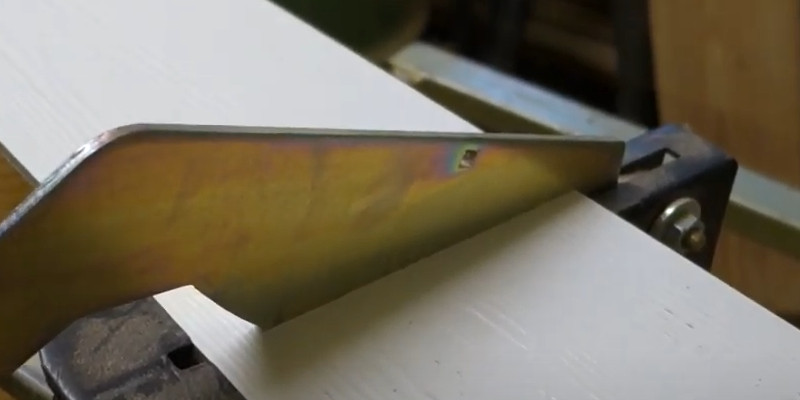
Gillotine for Cedral boards
If you are working with Cedral cladding boards you should consider getting one of these tools. Good thing about them is that you can use them and sell them after. The cost of doing it will not be very much.
You get your money back and you are not forced to breathe dust unlike with a circular saw.
Quality of the cuts like?
When using guillotine, the quality of the cuts are clean and sharp. Guillotine takes a thin piece out of the middle. If you look, why is that? It's because the guillotine got two shoulders.
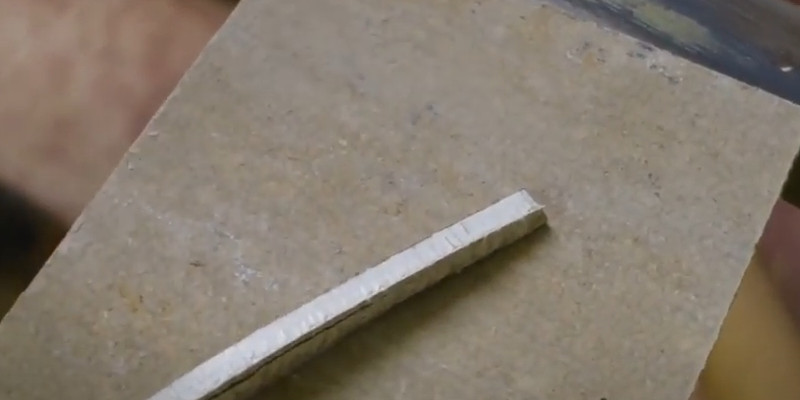
Off cut of Cedral board
Can I cut 12mm Cedral click board with Guillotine ?
No, Guillotine will only work for square cuts. In this case that will be our 10mm Cedral Lap board.
3. Electric jigsaw
While the method of cutting the boards with a handsaw or guillotine is ideal for many situations, there are times when you can’t use it, such as when cutting a curve. So we need to look at a more conventional manner of how to cut Cedral panel. This is where the jigsaw takes its place.
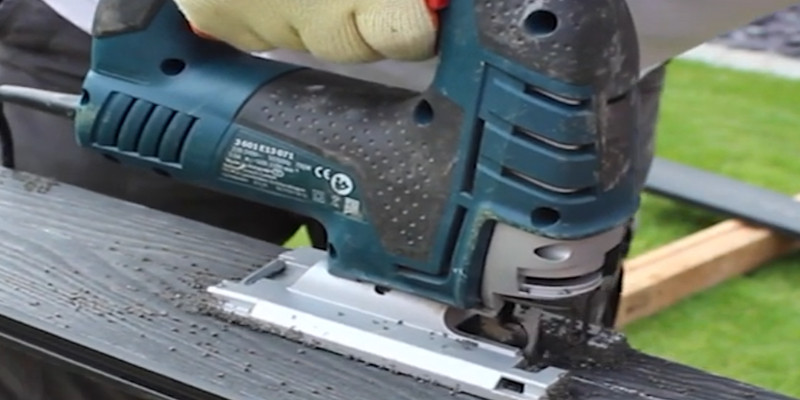
You’ll want to work from the back side of the panel as well, as that is the side that the saw will naturally splinter. It is best to work with a fine-toothed blade. This will provide a better finish, as they won’t go dull easily.
Is Jigsaw good for straight cuts?
Jigsaws can be great for cutting cladding panels but it can be hard to make a straight cut with them. The secret is to use a straightedge, which is clamped to the panel you are cutting.
Cedral fibre-cement board is very abrasive and dulls ordinary blades very quickly. While the blade works well at first, after a few cuts you will notice that blade dulled quickly! If you use metal blades for fibre cement cutting material will literally eat up the teeth within a length of about 1 meter. It this situation is recommended to use Bosch T 141 HM circular JIGSAW BLADE
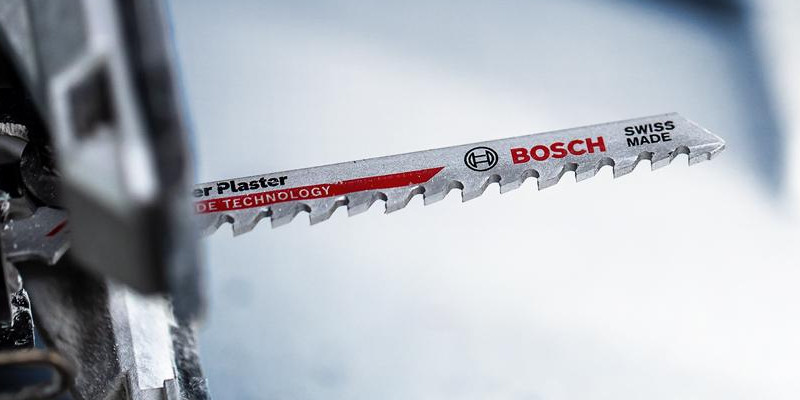
Bosch T 141 HM blade
4. Circular saw
Our fourth method of cutting cladding boards will be Circular saw. When cutting fiber cement siding with handheld circular saw, you should use an appropriate blade. To keep dust to a minimum, use a circular saw that's equipped with either a dust collection bag.
A hand held circular saw is ideal for cutting large quantities. It is ideal for shaving off overhanging edges of your project.
For this type of tool you would be looking for a blade with poly crystalline diamond teeth that cut effortlessly through high quality composite panels. For the best quality cuts it is crucial to make sure the blade does not protrude more than 1-2mm out of the base of application.
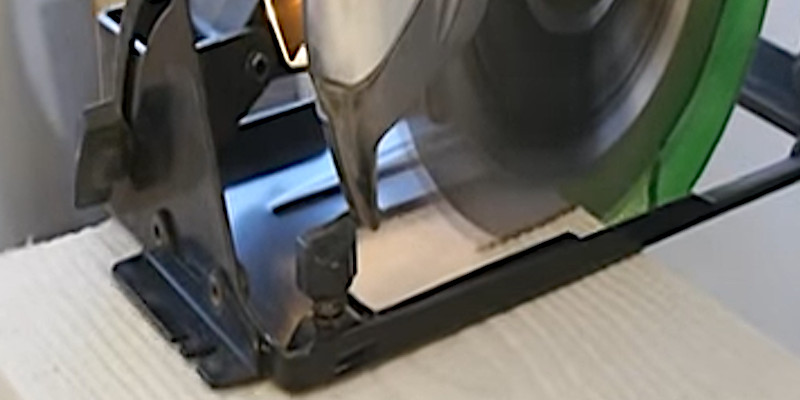
And again, cutting from the back of the board is advisable as the saw guide leaves marks across the board surface. As mentioned earlier, test cutting is recommended.
Circular saw produces a clean cut. It eliminates the need to try and make good.
Saw blades are available in a number of diameters ranging from 160 to 230 millimeters. A 4 tooth blade on a 180mm diameter blade is recommended for cutting.
What are disadvantages of cutting Cedral cladding boards with circular saw?
The cost of the circular tungsten blades can run as dear as £120. So something that’s not going to get used perhaps for job after job after job maybe that is a consideration too.
5. Angle grinder
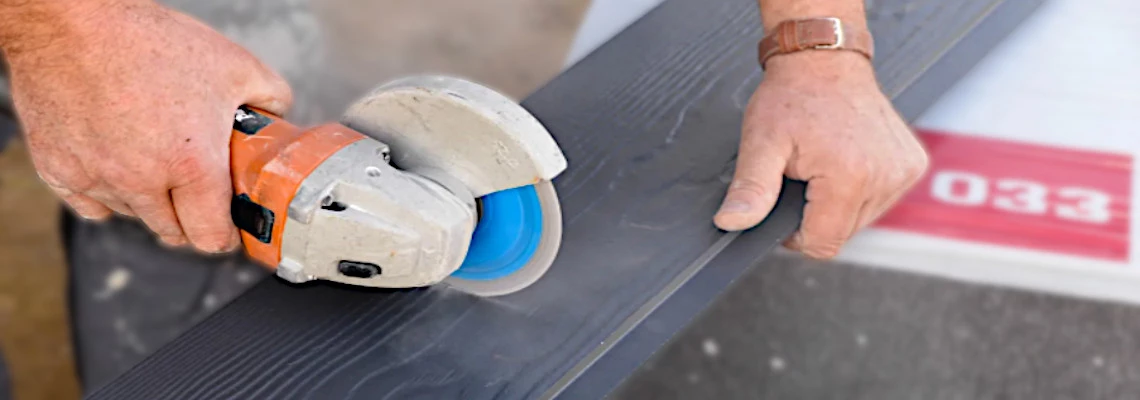
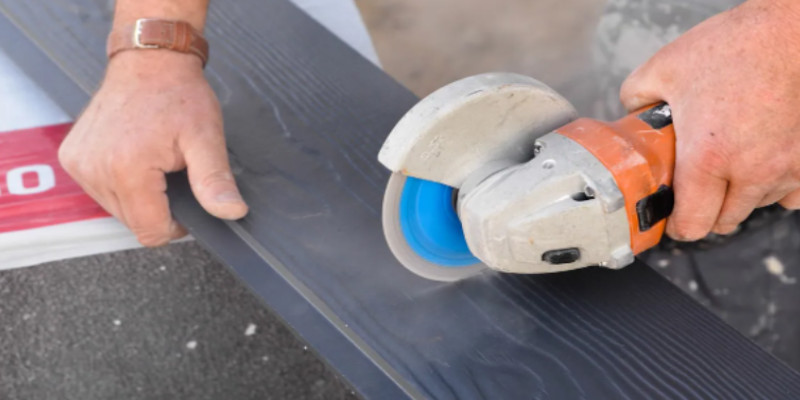
You can also cut Cedral board with an angle grinder fitted with a diamond-impregnated cutting wheel, but this tool produces a lot of dust and is harder to control than a circular saw.
Some people still use angle grinder as a the only tool to cut Cedral planks. Some people say “this is the worst option to choose”. Why? Because of Dust! We all know that dust is not a healthy thing to breathe.
6. Cedral cut with Mitre Saw
Our last tool is mitre saw. This tool can deliver smooth and accurate cuts along the length of your composite panel. It is an excellent tool to achieve straight clean cuts and multiple angles. An ideal solution for achieving both cross cuts and mitre cuts.
.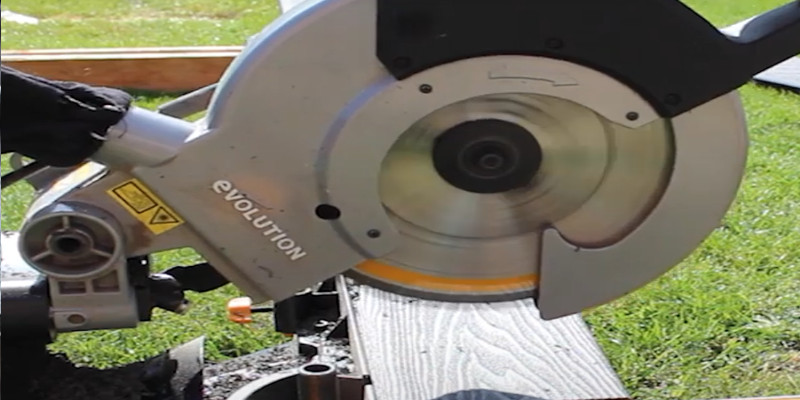
Cutting boards with mitre saw
Now we got cutting techniques out of the table, let’s answer a few questions.
How do I make holes in Cedral boards?
Simply equip a jigsaw with a metal cutting blade. To start the saw in fibre-cement board, drill a hole through the Cedral cladding board large enough for the jigsaw blade.
Do I need to clean Cedral boards after cutting?
Yes, always make sure that after cutting you wipe away dust with a clean, dry cloth.
Can I cut Cedral board with a utility knife?
This type of cladding is difficult to cut. If you cut Cedral fibre cement board with a utility knife it will take you forever.
Related articles:
Cedral Cladding and Frequently Asked Questions
Cedral cladding. Lap or Click?
Fibre cement cladding technology
How to install Cedral Click Cladding
How to install Cedral Lap Cladding
How to clean fibre cement cladding?
Weatherboard Touch Up Paint for Cedral
How much is Cedral cladding per square Metre?
Cedral Weatherboard. Timeless façade board?
Bibliography
1. youtube.com “HardiePlank HardieGuillotine - Demo, No dust” June 17, 2019, accesed April 08, 2021
https://www.youtube.com/watch?v=WqEFyZJzwBU
2. youtube.com “How To Cut NeoTimber® Composite Decking Boards” February 13, 2020, accesed April 08, 2021
https://www.youtube.com/watch?v=O57DZKDHhKk
*All the information provided in the content published on Insulationgo blog is for informational and educational purposes only. Insulationgo LTD makes every effort to ensure the accuracy and timeliness of the content, but we do not assume any responsibility for any errors or omissions.
The information presented on this blog should not be considered as professional advice or a substitute for consulting relevant experts. Before making any purchase decisions or taking action based on the information presented here, it is strongly recommended to contact the product manufacturer directly to verify the details and ensure its suitability for your specific needs.
By using this blog, you acknowledge and agree that Insulationgo LTD shall not be held liable for any damages, losses, or inconveniences arising from the use or reliance on the information provided herein. This limitation of liability applies to all users of the blog, including but not limited to visitors, readers, and subscribers.
